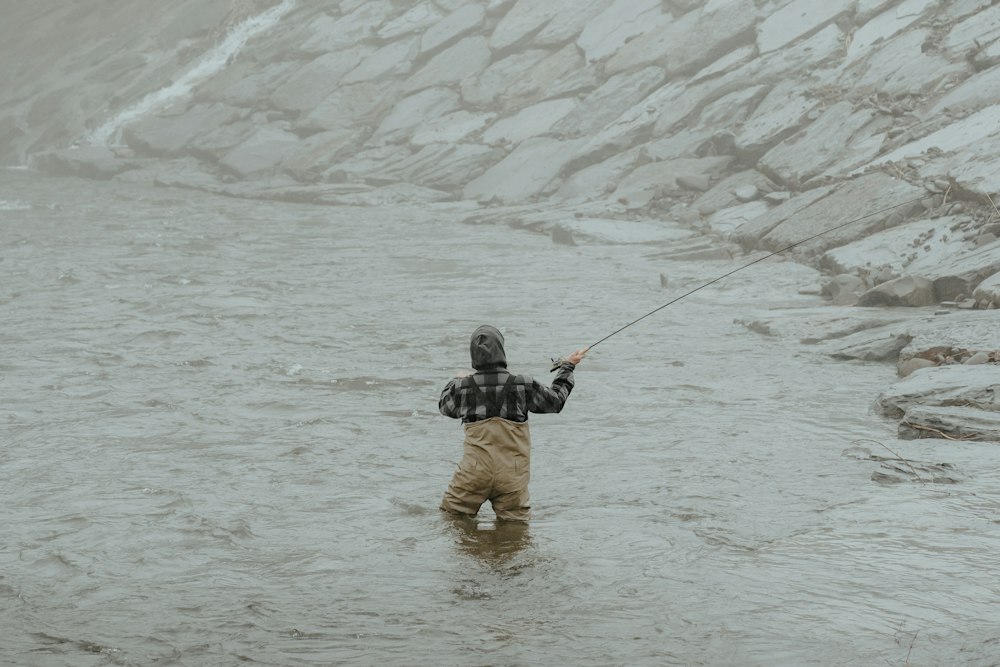
Illustrative fishing photography. Photo credits
Start with the right questions.
Choose a manageable place to learn and give yourself time to observe. Use these starting points to shape a simple plan, then adapt to what you see on the water.
- Choose rod length for stream size and overhead cover.
- Practice landing fish without a reel in easy conditions.
- Keep line management simple and dry telescopic sections before storage.
A CLOSER LOOK
Less equipment, more attention to position.
A fixed line changes the way you think about reach. Instead of solving every problem with more line, you move, choose a manageable angle, and control a short presentation. That makes tenkara an absorbing way to examine small water, provided the rod length suits the space.
Practice extending, collapsing, and protecting the rod before taking it along an overgrown bank. Keep grit away from the sections and follow the maker's storage instructions. Plan how to land a fish with a fixed line, especially where the bank is high or vegetation limits movement.
The compact kit can make it tempting to treat preparation casually. Access, rules, water conditions, and safe footing still matter. A small selection of flies and a deliberate route can keep the outing simple without leaving the important decisions unmade.
Fish with a question in mind.
Instead of asking only whether the fish are biting, ask something you can investigate. Are you presenting at the right depth? Can the bait move naturally? Are you spending time near a useful change in the water? A clear question turns an uncertain morning into an experiment, even when the first few casts produce nothing.
Give each change a fair chance. Work a small area from a few sensible angles, then alter one part of the presentation. Changing location, lure, line, and retrieve together may produce a fish, but it makes the result harder to repeat. A simple sequence also leaves you more attention for what is happening around you.
A page from your fishing notebook
| Record | Why it is useful |
|---|---|
| Access and approach | How you reached the water and which areas were practical to fish. |
| Visible conditions | Clarity, current, shade, wind, and changes you actually observed. |
| Presentation | Bait or lure, approximate depth, retrieve, and direction of the cast. |
| What changed | The adjustment made before a bite, follow, missed take, or snag. |
Give the last part of the catch some thought.
Decide where you will land a fish before making the cast. Keep the appropriate net and unhooking tools within reach, and avoid putting yourself on unstable ground to reach the water. If keeping a lawful catch, plan suitable storage in advance. If releasing it, prepare the handling process so you do not have to search a bag while holding the fish.
A fishing day also leaves traces after the tackle is packed. Check the ground for line, hooks, bait containers, and scraps of plastic. Taking a small amount of somebody else's litter home is a useful habit, especially at access points shared by anglers, families, and wildlife.
Questions anglers ask
How long should I stay in one place?
Stay long enough to try a reasoned approach, but notice when you are repeating the same cast without learning anything. Sometimes a different angle or depth is enough; sometimes a move is the useful experiment. Let access, conditions, and your observations shape the decision.
What should I change when nothing happens?
Check the basics before buying something new: legal access to suitable water, a working rig, intact line, exposed hook points where appropriate, and a presentation reaching the area you intend. Then change one element and watch for a response.
A NOTE TO KEEP IN YOUR TACKLE BOX
A long rod can be frustrating on a tightly overgrown stream.
Before you head out.
Confirm legal access, licenses, current local regulations, and weather for the specific water you will visit. Pack suitable flotation and safety equipment, tell someone your plan, and choose conditions within your experience.
Make a plan for your day ↗Keep learning from the source.
For gear and technique fundamentals, explore Take Me Fishing. For U.S. marine fishing resources, visit NOAA Fisheries. Always check the agency responsible for your exact fishing location for current rules.

